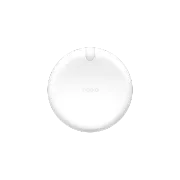
Aqara FP2 and Home Assistant: Complete Guide to the mmWave Presence Sensor and Advanced Automations
Have you ever been left in the dark in the living room or office simply because you were sitting still reading or working? Traditional motion detectors with passive infrared technology (PIR) have done their job for years, but they have an obvious problem: they detect visible movement, not static presence. The Aqara FP2 presence sensor solves this thanks to millimeter-wave radar technology (mmWave). In this guide, we take an in-depth look at how it works, its key features, how to integrate it with Home Assistant, and how to create real advanced automations for a smart bedroom.
On YouTube I share more tutorials, hands-on tests and real smart home setups. Subscribe on YouTube

Related video on YouTube
Video1. Why Is the Aqara FP2 Not a Regular PIR Sensor?
Unlike PIR sensors, which only react to thermal changes caused by movement, the Aqara FP2 emits high-frequency electromagnetic waves and analyzes the signal bouncing back from the environment.
This allows it to:
- Detect micro-movements: It picks up breathing or slight body movements, recognizing whether someone is lying in bed or sitting on a sofa without moving.
- Mapping and zone division: It can divide a room of up to 40 m² into up to 30 independent virtual zones. A single sensor can replace several traditional detectors.
- Multi-target tracking: It can simultaneously track up to 5 people, although Aqara recommends up to 3 for optimal accuracy, identifying each person’s position in the room.
- Total privacy: Since it uses radar and not a camera, it is completely safe to install in private areas such as bedrooms or bathrooms.
- Built-in light sensor: It measures ambient light to condition lighting automations.
- IPX5 certification: Suitable for areas with some humidity.
Important: The sensor tracks "targets"; it does not perform facial recognition or know who each person is. It also requires permanent USB-C power (5V/1A) and 2.4 GHz Wi-Fi connectivity, without needing proprietary Zigbee hubs.
2. Operating Modes and Technical Limitations
Before configuring it, it is worth knowing its three working modes, which do not run in parallel:
- Zone Detection Mode (Positioning): The standard mode for home automation and advanced automations.
- Fall Detection Mode: Designed for elderly care. It requires installing the sensor on the ceiling. It does not replace certified medical equipment.
- Sleep Monitoring Mode: Allows breathing and heart rate to be recorded for a single person in bed without wearables.
To get the most out of it in home automation, the recommended mode is zone positioning.
3. Installation, Calibration and Sources of Interference
The physical location of the sensor is critical. It is not enough to simply stick it on any wall:
- Strategic placement: Place it at medium height with a direct view of the key points, such as the bed, entrance door or passage areas.
- Mapping in the Aqara Home app: After pairing it, you adjust the room boundaries to prevent the radar from going through thin partitions and detecting the adjacent room, and then draw the zones, for example "Bed", "Entrance" or "Bathroom".
- Interference zones: It is essential to mark moving elements such as ceiling fans or curtains to avoid constant false positives.
4. Integrating the Aqara FP2 with Home Assistant
The Aqara FP2 integrates with Home Assistant directly through HomeKit Controller (HomeKit accessories) over the local network:
- You do not need an iPhone, iPad or Apple TV. Home Assistant detects it automatically when it is on the same Wi-Fi network.
- Available entities: Home Assistant will create a presence binary sensor for each zone configured in the Aqara app, as well as the ambient light sensor.
(Note: Although there is an advanced HACS integration called "Aqara Devices" for developers with expanded features, the standard local HomeKit integration works immediately and reliably.)
5. Practical Bedroom Automations
Automation 1: Smart Climate Control When Lying Down
- Trigger: Sustained presence detection in the "Bed" zone.
- Condition: Bedroom temperature above a comfort threshold, for example > 26 °C.
- Action: Turn on the air conditioner in the desired mode.
- Turn-off: When the room remains empty for a set time, the system turns off the climate control or raises the setpoint to save energy.
Automation 2: Adaptive Lighting Without Disturbing Anyone
The classic problem with a PIR detector in a bedroom is that if someone is already sleeping and their partner enters, the main light suddenly turns on. With the FP2, this can be solved using logical conditions:
- If you enter and the bed is empty, with low light: The main bedroom light turns on.
- If you enter and someone is in bed: Only a dim courtesy light is activated, such as an under-bed LED strip or bedside lamp at minimum brightness.
alias: Bedroom - Entry lighting based on bed presence
description: >
  When entering the bedroom while it is dark, turn on normal lighting if
  the bed has been empty for a while. If someone is in bed or there is doubt
  due to a recent loss of presence, use dim lighting.
triggers:
  - trigger: state
    entity_id:
      - binary_sensor.bedroom_motion_occupancy
    from: "off"
    to: "on"
conditions:
  - condition: numeric_state
    entity_id: sensor.bedroom_illuminance
    below: 10
actions:
  - choose:
      - conditions:
          - condition: state
            entity_id: binary_sensor.bed_presence
            state: "off"
            for:
              minutes: 10
        sequence:
          - action: light.turn_on
            target:
              entity_id: light.bedroom_table_lamp
            data:
              brightness_pct: 80
              color_temp_kelvin: 3500
    default:
      - action: light.turn_on
        target:
          entity_id: light.bedroom_table_lamp
        data:
          brightness_pct: 10
          color_temp_kelvin: 2200
mode: restart
Pro tip: To avoid false negatives caused by brief sensor dropouts while someone is sleeping, add a margin or confirmation delay to the bed condition before allowing the main light to turn on.
Recommended gear
Device used in this project: Aqara Presence Sensor FP2. If you need it, here is where to find it:
- Aqara Presence Sensor FP2 — Reviewed in the video: Amazon
6. Conclusion: Is the Aqara FP2 Worth It?
The Aqara FP2 is not a sensor meant to be placed in a secondary hallway. Its real value lies in multifunctional spaces, such as living rooms, bedrooms and offices, where the users’ position and rest state determine how the smart home behaves. If you want to take Home Assistant to the next level and stop depending on constant body movements, mmWave technology is the logical evolution.